

Access to Automations is required to use this feature. Contact your account manager if you don’t see Automations in your workspace.
Supported CRMs and objects
Tickets need a couple of extra settings so Triple Session knows which open ticket to write to. See HubSpot tickets.
How to set up a CRM update automation
1
Open Automations
In Triple Session, navigate to Automations and click New Automation.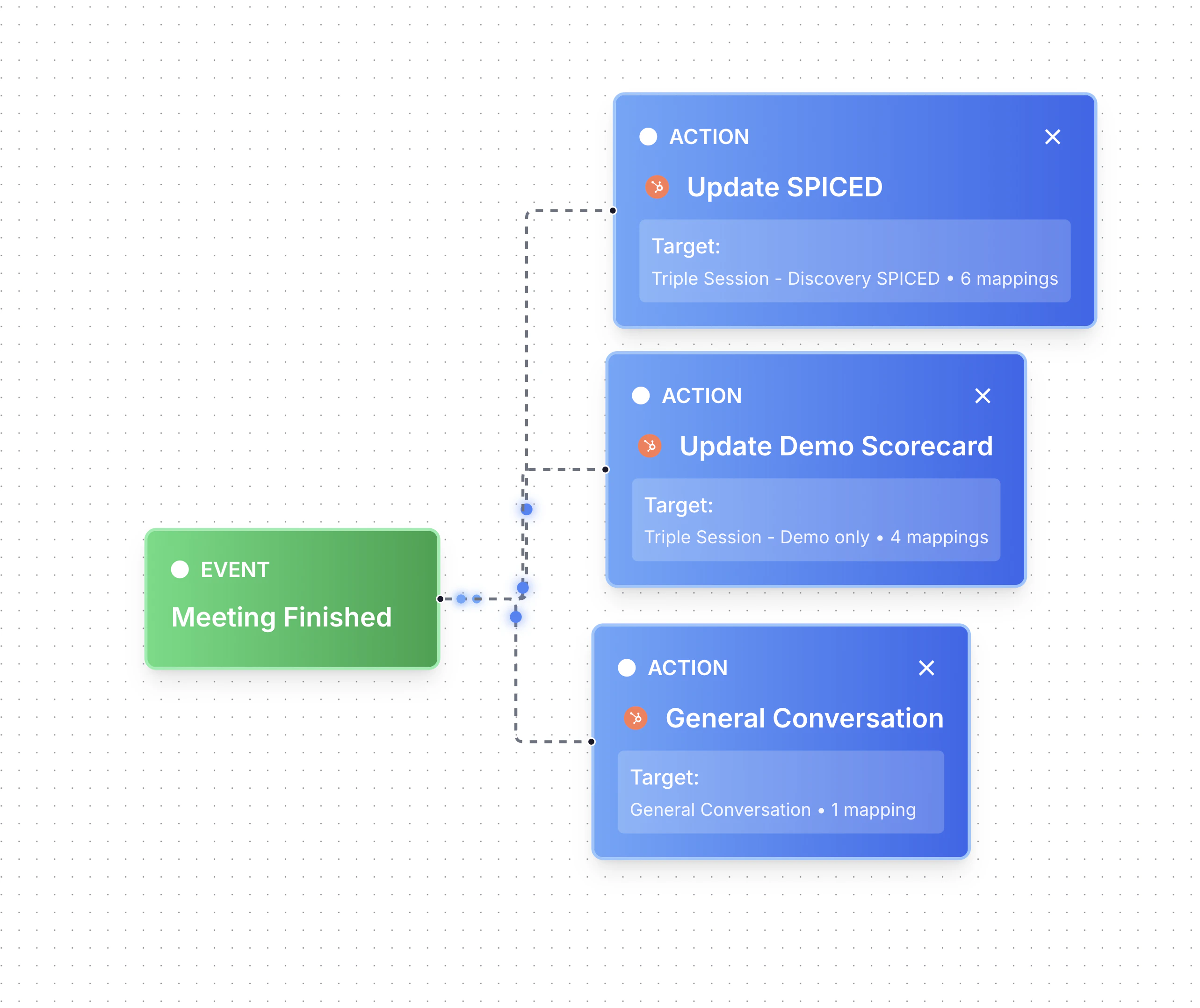
2
Add a CRM update action
Click Add Action, then change the action type to Update CRM.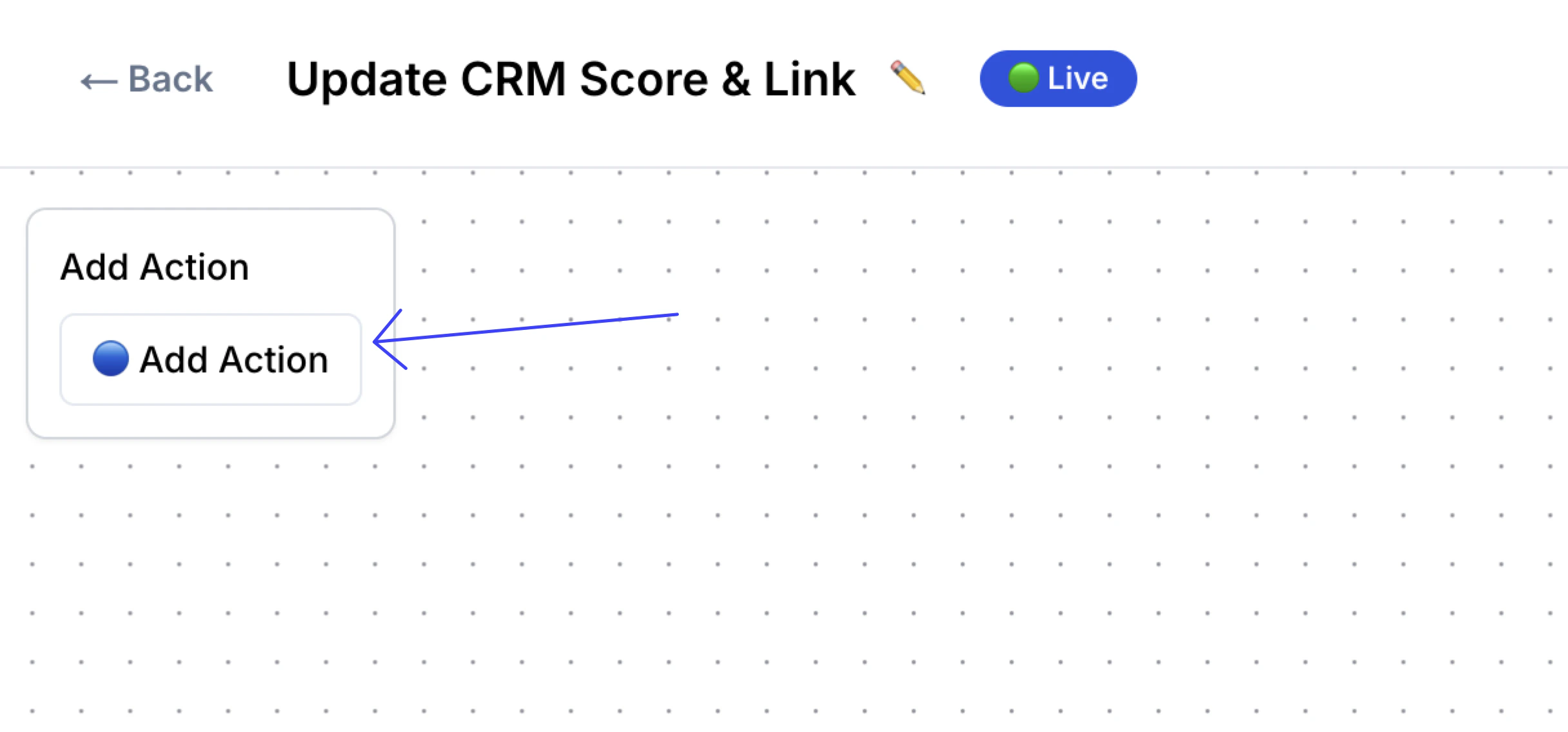
3
Select a scorecard and object type
Choose the scorecard whose results should trigger the CRM update.Then select the CRM object you want to update — Deal, Contact, Company, or Opportunity — depending on your CRM.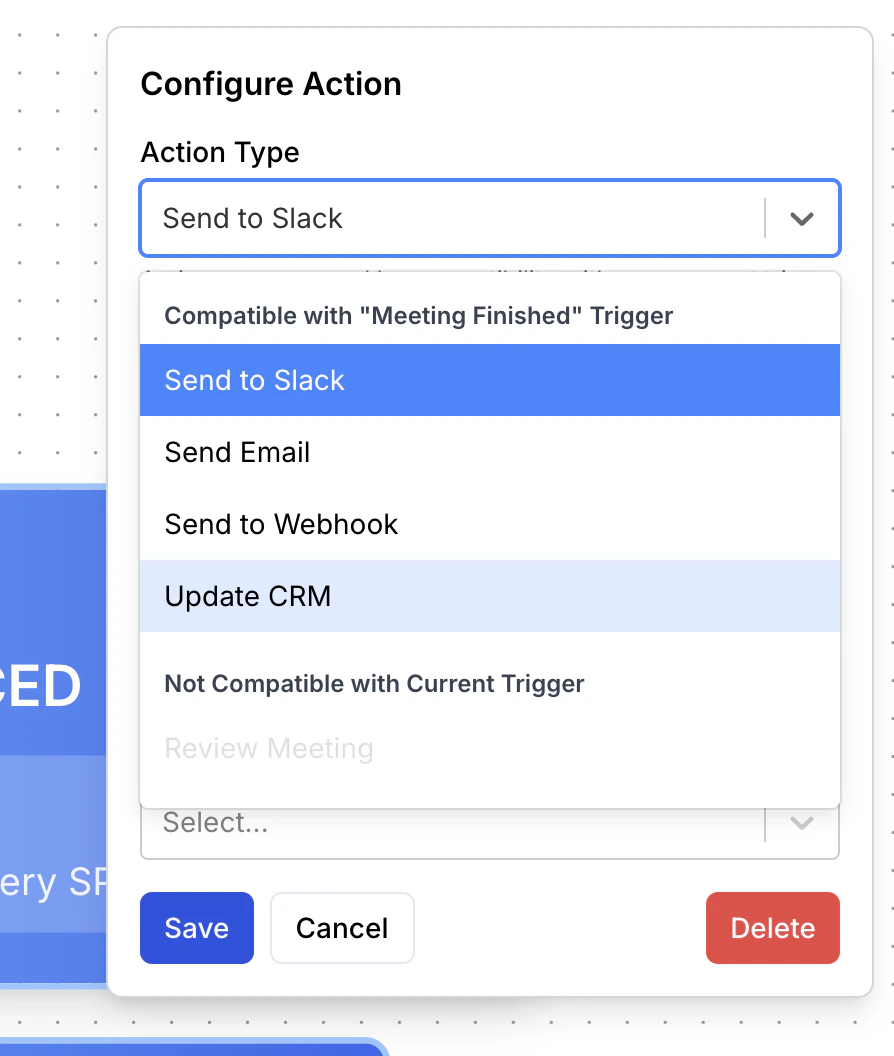
4
Map fields between Triple Session and your CRM
Define which CRM fields to fill or update. You can map multiple fields from the scorecard to CRM properties within a single automation.For text fields, choose how to handle existing data: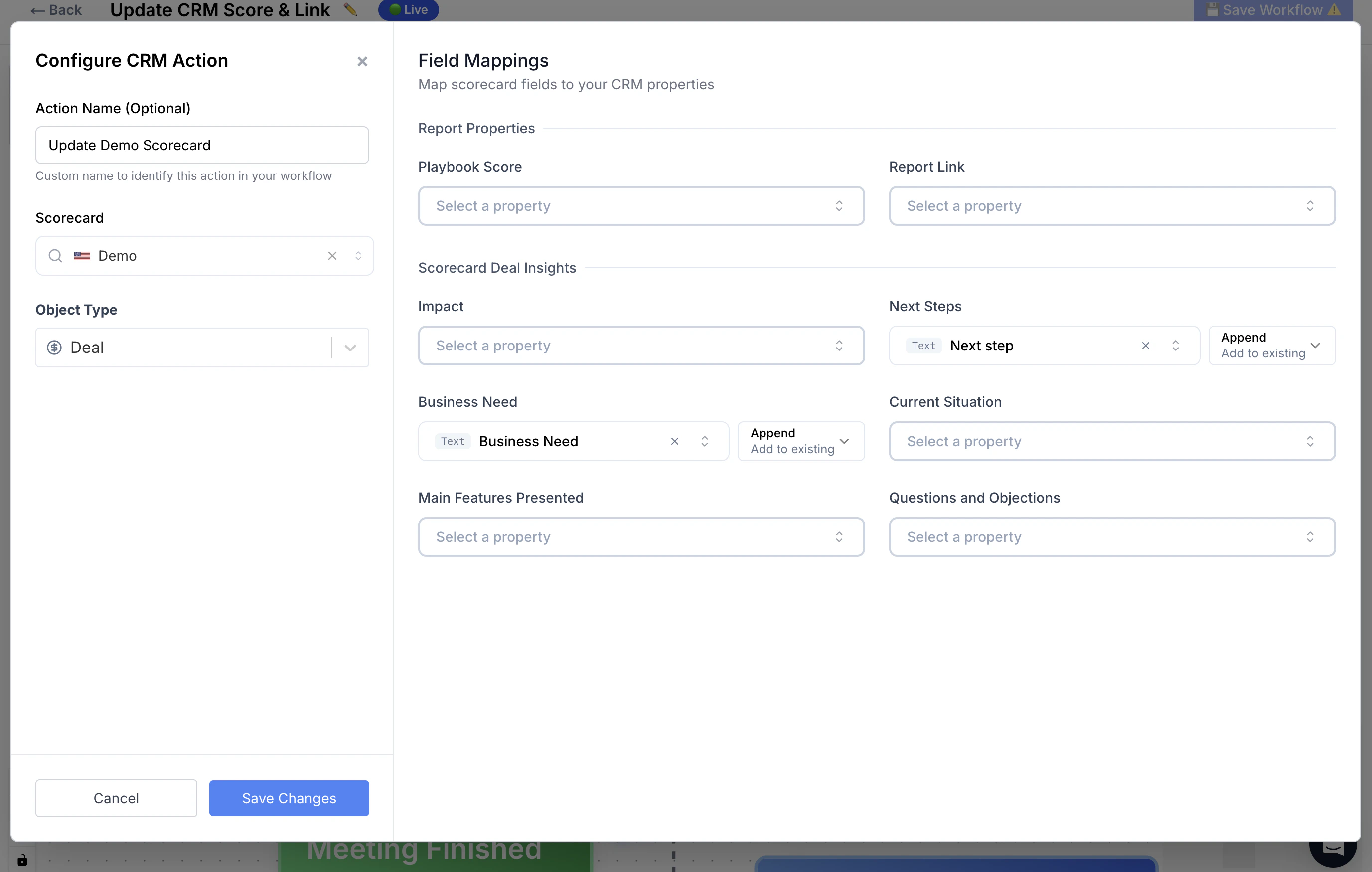
- Append — adds new data to the existing field content.
- Replace — overwrites the existing content entirely.
5
Save and enable the automation
Click Save, then change the status from Draft to Live.The automation starts running as soon as calls end.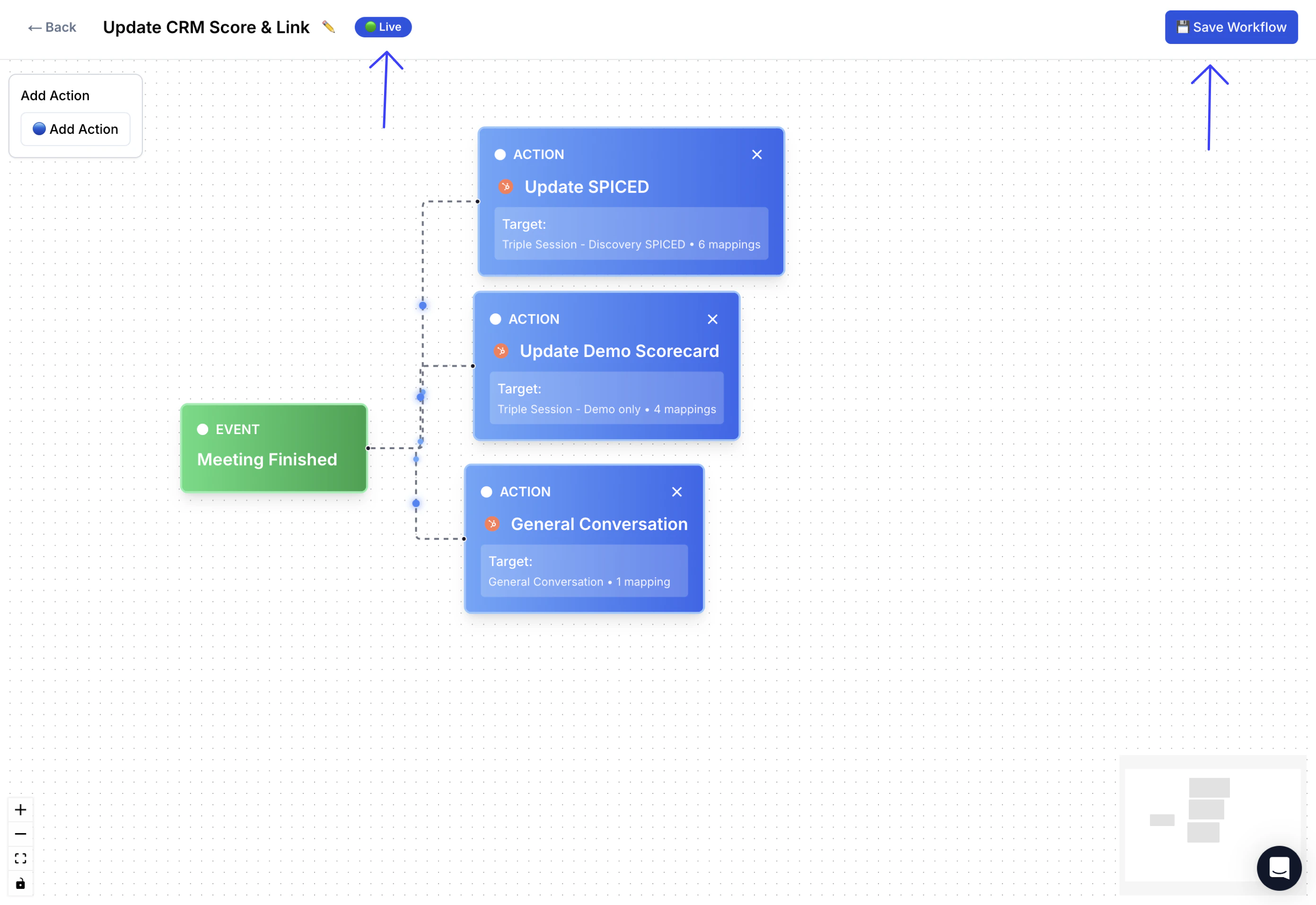
Monitor results
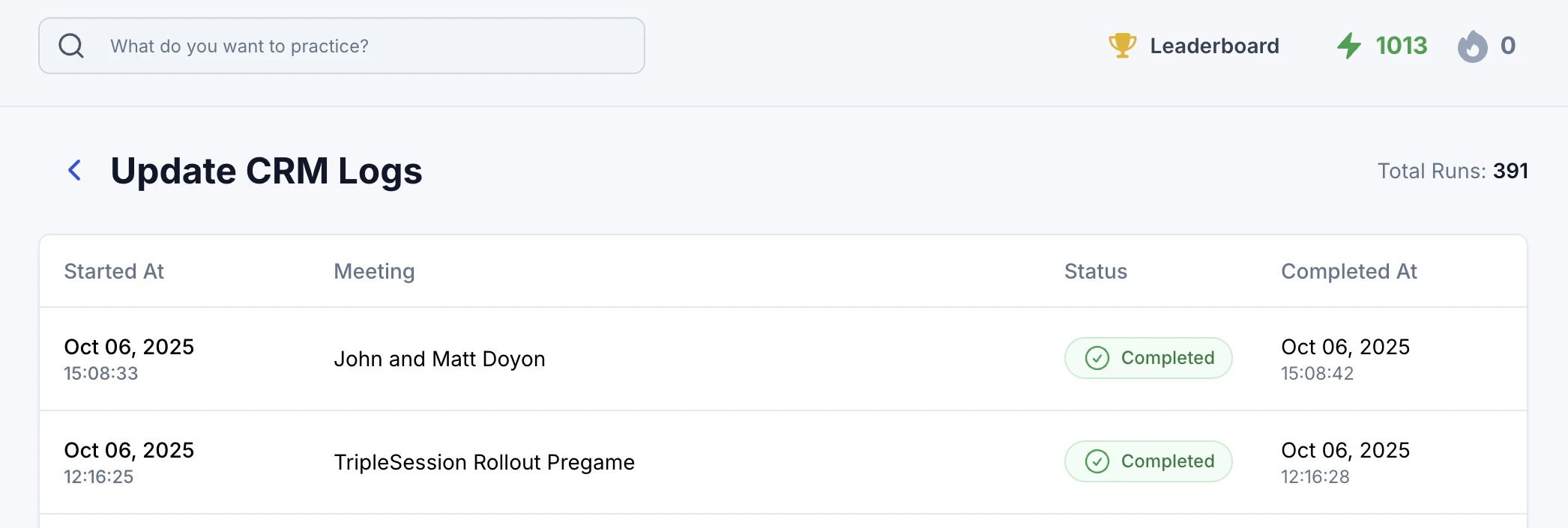
Click Logs at any time to review how the automation is performing. The log shows:- How many times the automation has run
- Success or error status for each execution
Automation settings for notes (Settings > AI Coach > CRM)
In addition to the Automations builder above, Triple Session also provides a simpler toggle-based approach for automatically pushing Notes to your CRM after every call. You can find these settings under Settings > AI Coach > CRM.The settings-based automatic push only sends information as CRM Notes. It does not automatically update specific CRM Properties. To automatically update properties, use the Automations builder described in the steps above.
- Which objects receive the notes (Deal, Contact, Company, Lead).
- What content to push — Summary, Deal Insights, or Summary + Deal Insights.
- Where notes are stored — the CRM Notes object or the Meetings object.
Security and control
- Data is only written to CRM fields you explicitly define in the automation.
- You can pause any automation at any time by toggling its status from Live back to Draft.
- Logs give full visibility into every automation execution.
Best practices
- Start with one scorecard. Validate that the field mapping works as expected before rolling out additional automations.
- Use append mode when syncing qualitative feedback or notes, so existing context isn’t lost.